Astronomy in 2025 is more accessible than ever. Whether you’re a curious student, a parent introducing your child to the stars, or an adult finally pursuing a lifelong interest, stargazing doesn’t require deep pockets. The market is filled with beginner-friendly telescopes that balance affordability, performance, and ease of use. This guide explores the top 5 budget telescopes for beginners in 2025, each handpicked for its quality, features, and value for money.
1. Celestron AstroMaster 70AZ
Best Beginner Telescope for Simplicity and Portability
If you’re new to astronomy and need a telescope that’s easy to use right out of the box, the Celestron AstroMaster 70AZ is a top choice. It’s especially suitable for those interested in viewing the moon, planets, and terrestrial landscapes.
Key Features:
- 70mm aperture and 900mm focal length
- Fully coated glass optics
- Manual alt-azimuth mount with pan handle
- Includes 10mm and 20mm eyepieces
- Finderscope for easy object location
Advantages:
Lightweight and compact design, ideal for small spaces
Easy assembly with no tools required
Delivers clear images of the moon and planets
Drawbacks:
Limited aperture means less detail on deep-sky objects
Price Range: $130 – $150
Ideal For: Moon viewing, planetary detail, and terrestrial use
2. Orion StarBlast II 4.5 EQ
Best Budget Reflector Telescope for Deep-Sky Viewing
The Orion StarBlast II 4.5 EQ is perfect for those who want more power and are willing to spend a bit more for deeper space observation. Its reflector design offers superior light-gathering ability, which means better images of galaxies, nebulae, and star clusters.
Key Features:
- 114mm aperture Newtonian reflector
- Equatorial mount for smooth tracking
- Comes with 10mm and 25mm Sirius Plössl eyepieces
- Short 450mm focal length for a wider field of view
Advantages:
Strong deep-sky performance at a reasonable price
Smooth manual tracking with EQ mount
High-quality optics
Drawbacks:
Setup is more involved compared to alt-azimuth models
Slightly bulky for travel
Price Range: $220 – $260
Ideal For: Galaxies, nebulae, star clusters
3. Zhumell Z100 Portable Reflector
Most Travel-Friendly Telescope Under $150
For portability and convenience, the Zhumell Z100 is a standout option. This tabletop Dobsonian reflector is ready to use right out of the box and offers excellent optics in a small, compact package.
Key Features:
- 100mm parabolic primary mirror
- Tabletop Dobsonian mount
- Comes preassembled
- Wide field of view, ideal for beginners
Advantages:
No complex mount or setup
Great for travel and quick observing sessions
Delivers crisp, bright images of the night sky
Drawbacks:
Needs a sturdy surface (table or stand)
Limited tracking control
Price Range: $120 – $140
Ideal For: Backyard astronomy, travel, casual observation
4. Celestron StarSense Explorer LT 80AZ
Best Smart Telescope for Beginners
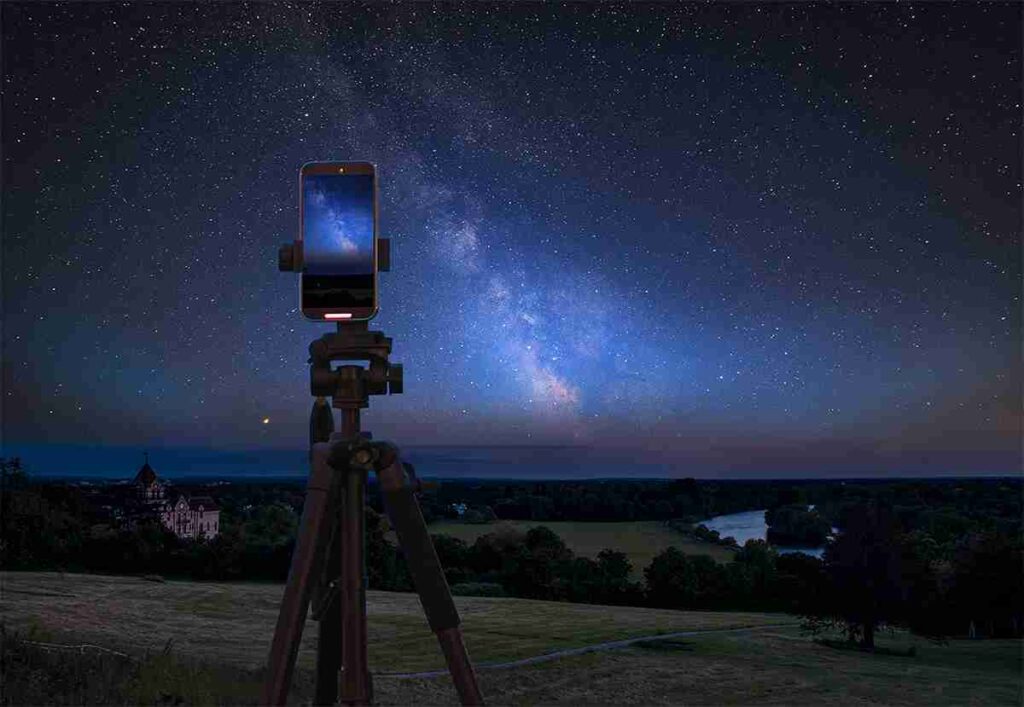
If you love the idea of using technology to help guide your stargazing, the Celestron StarSense Explorer LT 80AZ is built for you. With an intuitive app and your smartphone, you can locate and identify celestial objects with ease.
Key Features:
- 80mm refractor telescope
- StarSense app integration
- Alt-azimuth mount with slow-motion controls
- Includes 10mm and 25mm eyepieces
Advantages:
App-based star locating makes it beginner-proof
Excellent optics for planets and bright deep-sky targets
Very user-friendly interface
Drawbacks:
Requires a compatible smartphone
Performance relies on phone sensors
Price Range: $180 – $200
Ideal For: Beginners who prefer tech-guided exploration
5. Meade Polaris 130 EQ
Best Budget Telescope with Advanced Capability
For those who want to go beyond casual stargazing and dive deeper into the night sky, the Meade Polaris 130 EQ is a powerful telescope that delivers outstanding magnification and clarity for its price.
Key Features:
- 130mm Newtonian reflector
- German equatorial mount with slow-motion controls
- Includes 6.3mm, 9mm, and 26mm eyepieces
- Red-dot viewfinder and educational software
Advantages:
Powerful enough for deep-sky and planetary views
Comes with a range of accessories
Great value for serious beginners
Drawbacks:
Setup and tracking take practice
Slightly heavier than other beginner scopes
Price Range: $230 – $270
Ideal For: Aspiring astronomers and intermediate users
Comparison Table: Budget Telescopes for Beginners
| Telescope Model | Type | Aperture | Mount Type | Strengths | Price Range |
|---|---|---|---|---|---|
| Celestron AstroMaster 70AZ | Refractor | 70mm | Alt-Az | Easy to use, very portable | $130–$150 |
| Orion StarBlast II 4.5 EQ | Reflector | 114mm | Equatorial | Great for deep-sky viewing | $220–$260 |
| Zhumell Z100 | Reflector | 100mm | Tabletop Dobsonian | Compact and beginner-friendly | $120–$140 |
| StarSense Explorer LT 80AZ | Refractor | 80mm | Alt-Az | Smartphone navigation | $180–$200 |
| Meade Polaris 130 EQ | Reflector | 130mm | Equatorial | High magnification power | $230–$270 |
Buying Guide: What to Look for in a Beginner Telescope
1. Know What You Want to Observe
For the moon, planets, and nearby stars, go with refractors or small reflectors.
If you’re interested in galaxies, nebulae, or deep-sky objects, choose a reflector with at least 100mm aperture.
2. Consider Portability
Smaller scopes like the Zhumell Z100 are great for travel and quick setup.
Larger scopes offer better views but may be heavier and bulkier.
3. Understand the Mount
Alt-azimuth mounts are intuitive and easy for beginners.
Equatorial mounts are better for tracking objects across the sky but have a steeper learning curve.
4. Don’t Forget Accessories
Look for telescopes that include multiple eyepieces, a finderscope, and maybe a Barlow lens.
Consider apps like Stellarium or SkySafari for extra guidance.
5. Stick to Your Budget (But Invest Wisely)
Spending a little more often results in significantly better optics and build quality.
All five options above deliver excellent value under $300.
Final Thoughts: Start Your Stargazing Journey Today
Entering the world of astronomy in 2025 doesn’t have to be complicated or expensive. Each telescope featured here provides a strong combination of affordability, quality optics, and user-friendly design. Whether you’re looking for app-based guidance, compact design, or raw power for deep-sky exploration, there’s a perfect match for every beginner.
The key to success in amateur astronomy isn’t just having the best gear — it’s using it consistently. So pick a telescope that fits your lifestyle, go outside, and let the night sky inspire you.