Starting astronomy is rewarding and magical, but choosing a budget-friendly beginner telescope can be overwhelming. This guide helps you prioritize features, understand telescope types, and find the best affordable model for your interests and experience.
Why Choosing the Right Telescope Matters
Starting with the right telescope sets the foundation for a positive stargazing experience. Buying a model that doesn’t fit your needs can lead to frustration, wasted money, and even cause you to abandon the hobby prematurely.
When choosing your first telescope on a budget, your main goal should be balancing affordability, ease of use, and optical quality. A good beginner telescope will let you see bright celestial objects clearly — like the Moon’s craters, Jupiter’s moons, or bright star clusters — without complicated setups or poor optics.
Step 1: Identify What You Want to Observe
Before you buy, think carefully about what interests you most in the night sky. Different telescopes excel at viewing different celestial objects.
Moon and Planets: If you love exploring detailed lunar surfaces or planetary features such as Saturn’s rings or Jupiter’s cloud bands, you’ll want a telescope that delivers sharp, high-contrast images at higher magnifications. Refractor telescopes or small compound telescopes (like Maksutov-Cassegrains) are ideal for these targets.
Deep-Sky Objects: If nebulae, star clusters, and galaxies fascinate you, aperture becomes the most important feature. Larger apertures gather more light, making faint objects visible. Reflector telescopes typically offer more aperture for your money and are better suited for deep-sky observing.
Versatility: If you want a telescope capable of handling both planetary and deep-sky objects reasonably well, consider compound (catadioptric) telescopes. These hybrid designs combine lenses and mirrors but often come at a higher price.
Understanding your observing interests helps you avoid buying a telescope that looks good on paper but doesn’t deliver the views you want.
Step 2: Understand the Main Telescope Types
There are three primary telescope designs beginners usually consider: refractors, reflectors, and compound telescopes. Each has pros and cons, especially when keeping a budget in mind.
Refractor Telescopes
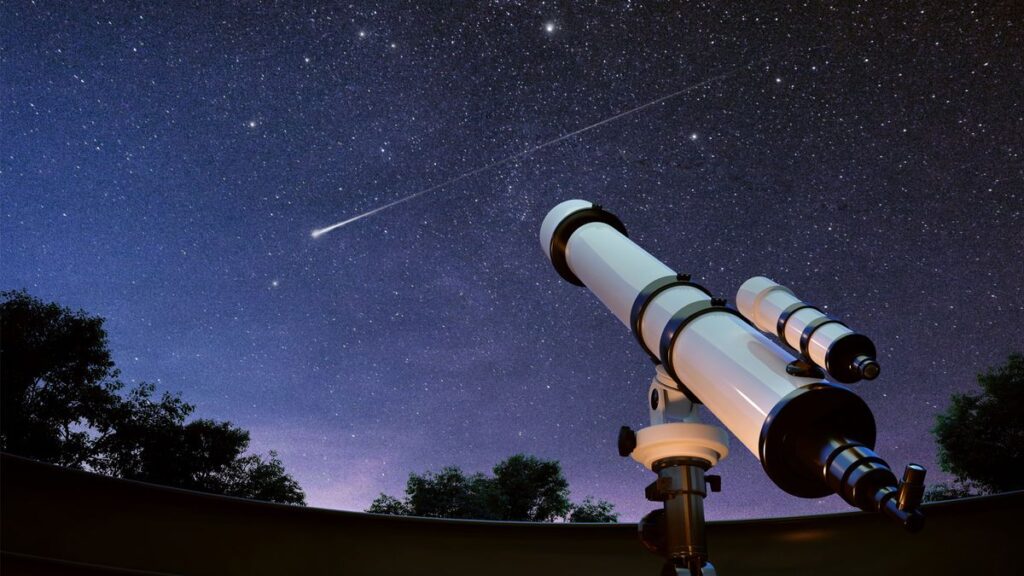
Refractors use lenses to collect and focus light. They’re known for producing sharp, high-contrast images and are excellent for lunar and planetary viewing. Their sealed tubes protect optics from dust and misalignment, making them low-maintenance.
Pros: Durable, easy to use, minimal upkeep, great for planets and the Moon.
Cons: Typically smaller apertures for the price and more expensive per inch of aperture compared to reflectors.
Recommended Aperture for Beginners: 70mm to 90mm.
Reflector Telescopes
Reflectors use mirrors instead of lenses, allowing for larger apertures at a lower cost. This design is well-suited for deep-sky observing, where light-gathering power matters most.
Pros: Larger aperture for less money, excellent for faint galaxies and nebulae.
Cons: Require occasional collimation (mirror alignment), open tubes can collect dust, generally bulkier.
Recommended Aperture for Beginners: 114mm to 130mm.
Compound (Catadioptric) Telescopes
Compound telescopes combine lenses and mirrors to offer compact size and versatile performance on both planets and the deep sky. They tend to be more expensive and slightly heavier.
Pros: Portable, versatile, good image quality.
Cons: Higher cost, more complex design.
Step 3: Aperture — The Most Important Specification
Aperture is the diameter of the main lens or mirror and determines how much light your telescope can collect. The larger the aperture, the brighter and more detailed your images will be, and the fainter the objects you can observe.
Many beginners focus too much on magnification, but aperture is far more important. While magnification can be increased with different eyepieces, without enough light (aperture), magnified images will look blurry and dim.
Good aperture sizes for budget beginner telescopes:
Refractors: 70mm to 90mm
Reflectors: 114mm to 130mm
Avoid very small apertures; they limit what you can see. But also remember that very large telescopes tend to be heavier, more expensive, and less portable.
Step 4: Choose an Easy-to-Use Mount
The mount is the telescope’s support system, allowing you to point and track objects smoothly.
Altazimuth Mounts: Move up-down and left-right. Intuitive and easy to operate, ideal for beginners.
Equatorial Mounts: Align with Earth’s rotation axis, enabling tracking of celestial objects with one-axis movement. Essential for astrophotography but more complex to set up.
For your first budget telescope, an altazimuth mount is generally best due to its simplicity.
Step 5: Portability and Setup Matter
If your telescope is heavy, bulky, or difficult to assemble, you’re less likely to use it regularly.
Look for lightweight models and those with simple setups. Tabletop telescopes or those with lightweight tripods work well for beginners. A telescope that’s easy to carry outside and quick to assemble means more time enjoying the sky.
Avoid telescopes that require advanced assembly or alignment beyond your comfort level.
Step 6: Eyepieces and Accessories
Your telescope usually comes with at least one eyepiece, which determines magnification and field of view. While you don’t need to invest in extras right away, pick a telescope that allows you to upgrade or add eyepieces later.
Helpful accessories include:
Barlow Lens: Increases magnification by 2x or 3x without buying new eyepieces.
Moon Filter: Reduces glare and enhances detail when viewing the Moon.
Star Charts or Astronomy Apps: Help locate and identify celestial objects.
Step 7: Budget and Trusted Brands
You can find quality beginner telescopes between $100 and $400. Avoid very cheap models under $100 as they often have poor optics and unstable mounts that make observing frustrating.
Trusted brands offering affordable, beginner-friendly telescopes include:
- Celestron
- Orion
- Meade
- Sky-Watcher
Step 8: New vs. Used Telescopes
Buying new provides peace of mind with warranties and quality assurance.
However, used telescopes can offer excellent value if you inspect them carefully. Check optics for scratches, test the mount’s stability and movement, and confirm all parts are included. Testing before buying is ideal.
Step 9: Tips for Beginner Success
Start with the Moon: It’s bright, easy to find, and reveals amazing details even in modest telescopes.
Learn the Night Sky: Use star charts or apps to find planets, constellations, and deep-sky objects.
Be Patient: Weather, light pollution, and practice affect your viewing experience.
Join a Community: Astronomy clubs or online forums provide support, advice, and chances to try different telescopes.
Conclusion
Knowing how to choose your first telescope on a budget means focusing on your interests, prioritizing aperture, selecting a simple mount, and picking trusted brands that offer affordable beginner telescopes. Avoid falling for flashy specs like extreme magnification that won’t deliver clear images.
With the right approach and a bit of research, you’ll own a telescope that makes the night sky come alive without overspending. Remember, astronomy is a journey, and your first telescope is just the beginning.