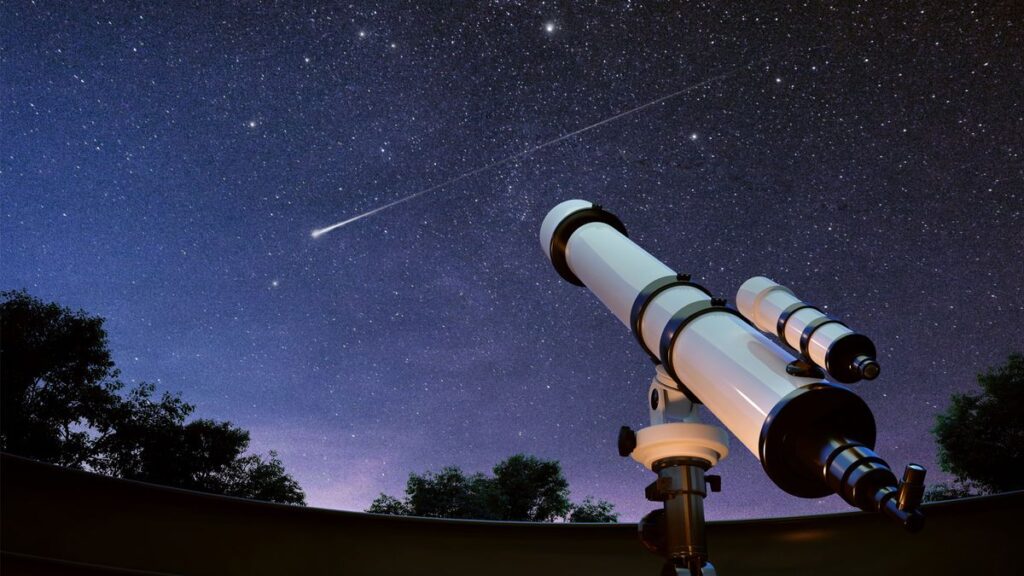
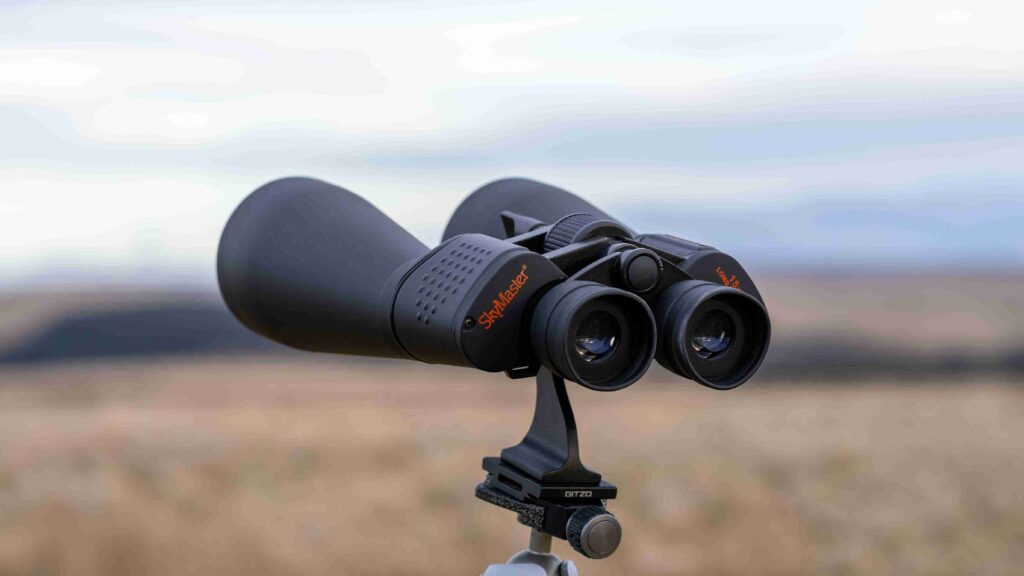
When you’re just starting your stargazing journey, investing in a telescope can feel intimidating, especially when many models cost hundreds or even thousands of dollars. But the good news is that even a modest $100 telescope can open up a whole new universe for beginners. Contrary to popular belief, you don’t need an expensive, high-powered scope to enjoy the night sky. With the right expectations and a basic understanding of what to look for, a $100 telescope can become a powerful tool to fuel your curiosity and expand your knowledge of the cosmos.
In this guide, we’ll break down what you can realistically see through a $100 telescope, what types of telescopes to consider in this price range, and tips for maximizing your experience under the stars.
What to Expect From a $100 Telescope
Let’s be honest—telescopes under $100 won’t show you breathtaking detail on distant galaxies. But they can give you clear, enjoyable views of many major celestial objects in our solar system and beyond. The key is managing your expectations. A beginner telescope in this range is best used for viewing:
- The Moon (with fantastic detail)
- Jupiter and its major moons
- Saturn and its rings (though less detailed)
- Bright stars and star clusters
- Some of the brighter deep sky objects, like the Orion Nebula or Andromeda Galaxy
This means you can enjoy real-time views of objects you may have only seen in pictures—and that’s an incredible experience in itself.
The Moon: Your First Target
The Moon is by far the easiest and most rewarding object to observe through a $100 telescope. You’ll see sharp craters, dark maria (lava plains), mountain ranges, and even subtle variations in surface texture. The Moon is so bright and close to Earth that even the smallest telescopes show it in surprisingly high detail.
For best results, avoid observing the Moon when it’s full. A half or crescent moon casts longer shadows across the surface, making features like craters and ridges more pronounced.
Planets You Can See
Jupiter
Jupiter is another favorite among beginner astronomers. Through a $100 telescope, you’ll easily spot its four largest moons—Io, Europa, Ganymede, and Callisto. On a clear night, you might even catch faint bands on Jupiter’s surface caused by atmospheric storms.
Saturn
Yes, you can see Saturn’s rings with a $100 telescope! While the image will be small, Saturn’s ring system is still distinguishable, and the sight of it often surprises newcomers. You may also see Titan, Saturn’s largest moon.
Mars
During opposition (when Mars is closest to Earth), you might observe Mars as a reddish disk. However, detail will be limited, and you likely won’t see surface features or polar ice caps clearly with budget optics.
Venus
Venus is bright and easy to find. A $100 telescope can show its phases—similar to the Moon’s—as it orbits the Sun.
Mercury
Mercury is a challenge even for more expensive telescopes due to its proximity to the Sun. You might spot it, but don’t expect much detail.
Deep Sky Objects (DSOs): What’s Possible
While DSOs like galaxies and nebulae are fainter than planets or the Moon, you can spot some brighter ones with a budget scope under the right conditions.
Orion Nebula (M42)
One of the most popular and visible nebulae in the sky, the Orion Nebula appears as a fuzzy, glowing patch in Orion’s sword. With a $100 telescope, you may even make out some internal structure or star formation.
Andromeda Galaxy (M31)
This is the closest major galaxy to Earth and can be seen with the naked eye under very dark skies. Through a small telescope, it looks like a faint smudge of light, not a spiral like in photos, but it’s still thrilling to see a galaxy 2.5 million light-years away.
Star Clusters
Open clusters like the Pleiades (M45) and globular clusters like M13 in Hercules are great targets. They’re easier to spot than galaxies or nebulae and provide lovely patterns of twinkling stars.
Binary Stars and Double Stars
These are great targets for beginners. Some famous binary systems, like Albireo in the constellation Cygnus, show two distinct stars—often with different colors—through a small telescope. They’re relatively easy to spot and offer a more rewarding view than trying to hunt down faint galaxies.
How Far Can You See?
This is a common question with a somewhat complex answer. Technically, you can “see” objects that are millions of light-years away, such as the Andromeda Galaxy. However, what you actually observe with your eyes will appear as faint glows, not the vibrant structures you see in astrophotography.
Telescopes do not function like microscopes. Instead of magnifying objects until they’re huge, they collect light. A $100 telescope collects less light than larger models, but still enough to show many beautiful sights, especially when viewed from a dark-sky location.
Choosing the Right $100 Telescope
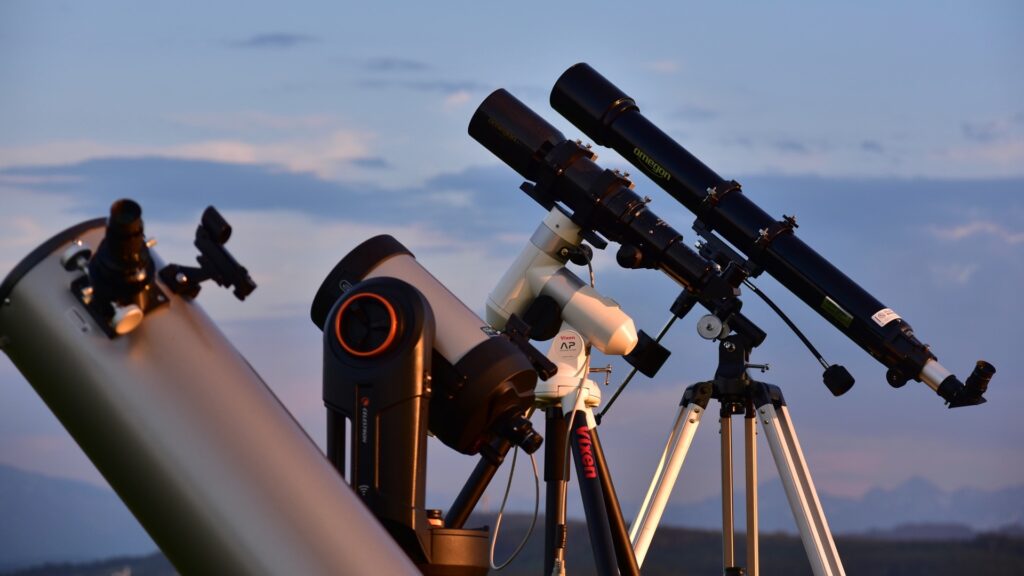
At this price point, your best options are:
Refractor Telescopes
Refractors use lenses and are typically more beginner-friendly. They’re great for Moon and planet viewing and require little maintenance.
Reflector Telescopes
Reflectors use mirrors and tend to offer more aperture (light-gathering power) for the price. They’re better for faint objects like nebulae or galaxies but may require regular alignment (collimation).
Recommended Models
- Celestron AstroMaster 70AZ (Refractor)
- Orion SpaceProbe II 76mm (Reflector)
- Meade Instruments Infinity 70mm (Refractor)
If buying used, you might get even better value—just make sure the scope includes all parts and is in good condition.
Best Conditions for Viewing
- Avoid city lights: Light pollution washes out faint objects. A dark sky makes all the difference.
- Check the weather: Clear, still nights with low humidity are ideal.
- Use a star map or app: Tools like Stellarium or SkySafari help you find targets.
- Let your eyes adjust: Give your eyes 15–30 minutes to adapt to the darkness.
- Be patient: Learning to use a telescope takes time, but the reward is worth it.
Final Thoughts
A $100 telescope may not rival high-end models, but it can absolutely deliver memorable views that inspire wonder. It’s enough to start your journey into astronomy and decide whether to invest further. For beginners, it’s more important to observe often and understand the sky than to chase expensive gear right away.
With realistic expectations, a simple telescope becomes a portal to the Moon’s craters, Jupiter’s moons, Saturn’s rings, and even distant galaxies. And with every clear night, your curiosity will grow—because even the smallest telescope can show you just how big the universe truly is.